Docklands · Melbourne
Facade and cladding work for Docklands high-rises.
Summit Facades carries out accredited facade inspections, cladding assessment and builder-grade rectification across the Docklands precinct. Newer stock is not problem-free stock — and the precinct's age is starting to show.
Why Docklands
New stock, real facade risks.
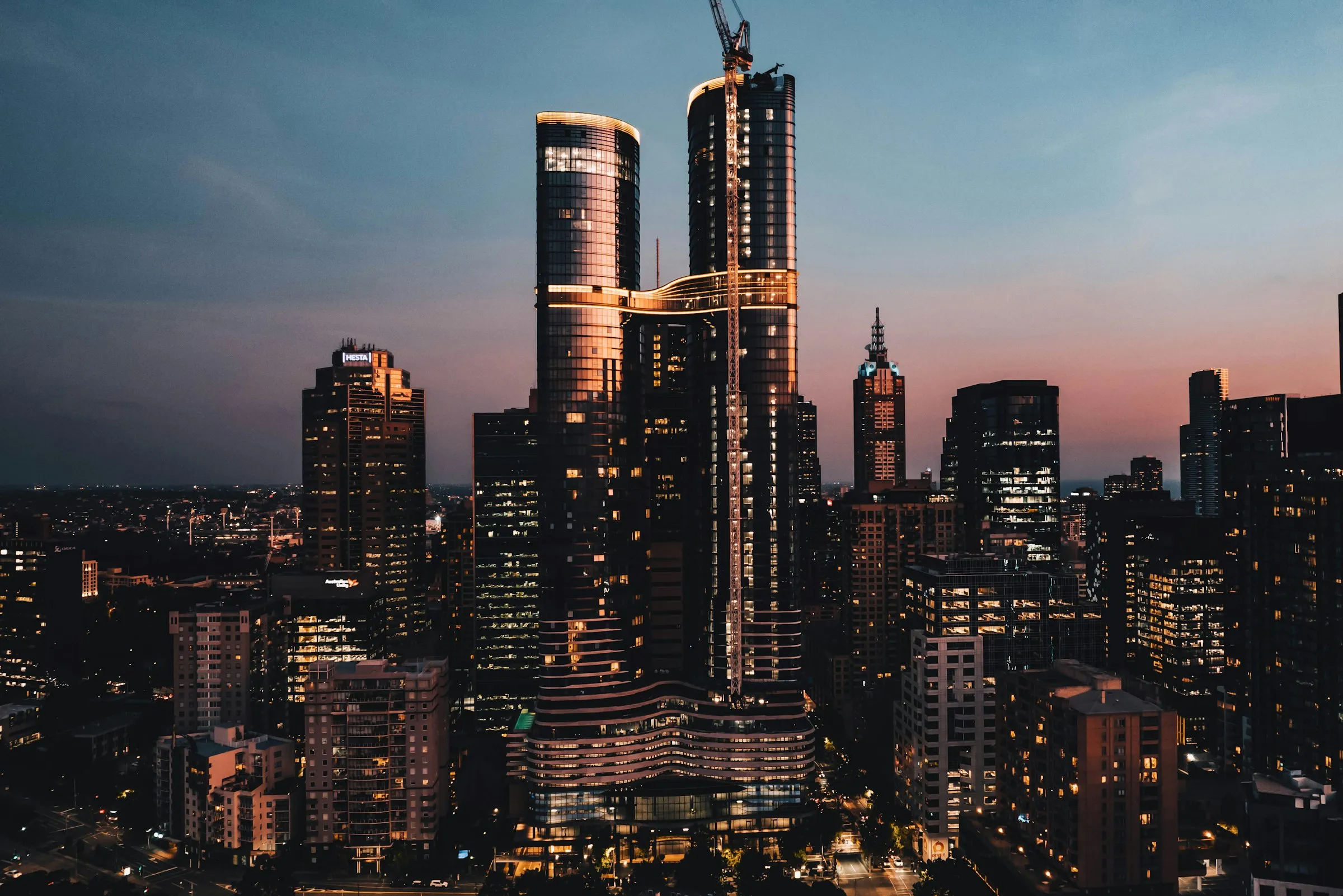
Docklands developed almost entirely through the 2000s and 2010s — a dense precinct of high-rise residential and mixed-use buildings that, almost without exception, used the ACP cladding systems now subject to scrutiny. The 2014 Lacrosse fire was a Docklands building; the post-Grenfell Victorian cladding audit identified many more here. The precinct is also the place where, fifteen to twenty years on from construction, sealant systems are reaching first-replacement age and post-construction defects are beginning to surface. Both threads — combustible cladding compliance and routine facade maintenance — need professional attention at the same time.
Common issues
The Docklands stock presents a predictable pattern.
Combustible cladding sits at the top of the list — ACP polyethylene-cored systems used widely through the precinct's construction era. After that: perimeter sealant failure on the unitised curtain-wall systems common in higher-rise Docklands buildings, particularly at panel-to-panel joints exposed to wind-driven rain. Then balcony waterproofing breakdown, water ingress at facade-to-roof junctions, and corrosion of facade-fixing brackets on buildings closest to the waterfront. Each issue has its own inspection method and its own remedy — but they often coexist in the same building, which is why a single integrated facade assessment is more useful than piecemeal trade call-outs.
New is not immune
Newer buildings still need facade attention.
The most common assumption — and the most expensive — is that a building under twenty years old does not need facade attention. New buildings carry construction defects that only manifest with time: sealant joints that were imperfect at install fail at year seven, not year one; concealed flashing details drawn one way and built another reveal themselves through staining a decade later. Add fifteen years of weathering and the picture changes again. A Docklands tower built in 2010 is now at the age where a structured facade inspection is the right starting point — not because the building is failing, but because the cost of finding small issues now is a fraction of the cost of fixing big ones later.
Our services for Docklands
Inspection, maintenance and cladding — one accountable team.
For Docklands buildings we deliver accredited inspections of every elevation, ongoing maintenance programs scheduled to the realities of high-rise stock, and full cladding assessment and rectification for ACP-clad buildings carrying compliance obligations. All three under one team, with a registered practitioner accountable for the rectification works.
-
Facade Inspections
Accredited inspection of every elevation, delivered as a photo-referenced defect report that holds up for owners corporations, insurers and engineers.
Learn more -
Maintenance Programs
Sealant replacement, coating refresh and inspection scheduled at the right intervals for high-rise residential stock.
Learn more -
Cladding Systems and Rectification
Compliant cladding assessment, replacement specification and builder-grade rectification, with a registered practitioner accountable.
Learn more
Questions
Docklands facade inspections, answered.
Book a facade inspection for your Docklands building.
Tell us the building and what is prompting the review — we will come back with a clear scope, a quote, and an approach that minimises disruption to occupants.
Request an inspection